Self-coaching,
made simple.
Your life, your words, your voice. Everything personal, everything private, everything yours.
Download on the App Store
Free · No subscription · No ads
Your life, your words, your voice. Everything personal, everything private, everything yours.
Collect voice messages from the people who love you and play them when you need a reminder of your worth. Familiar voices activate the brain's safety pathways, shifting you from stress to calm in seconds. Record a message for your future self — a week, a month, or a year from now. Receiving it later creates a powerful sense of continuity, a reminder that the person you're becoming has always been worth investing in.
"In simple terms… the right voice at the right time changes everything."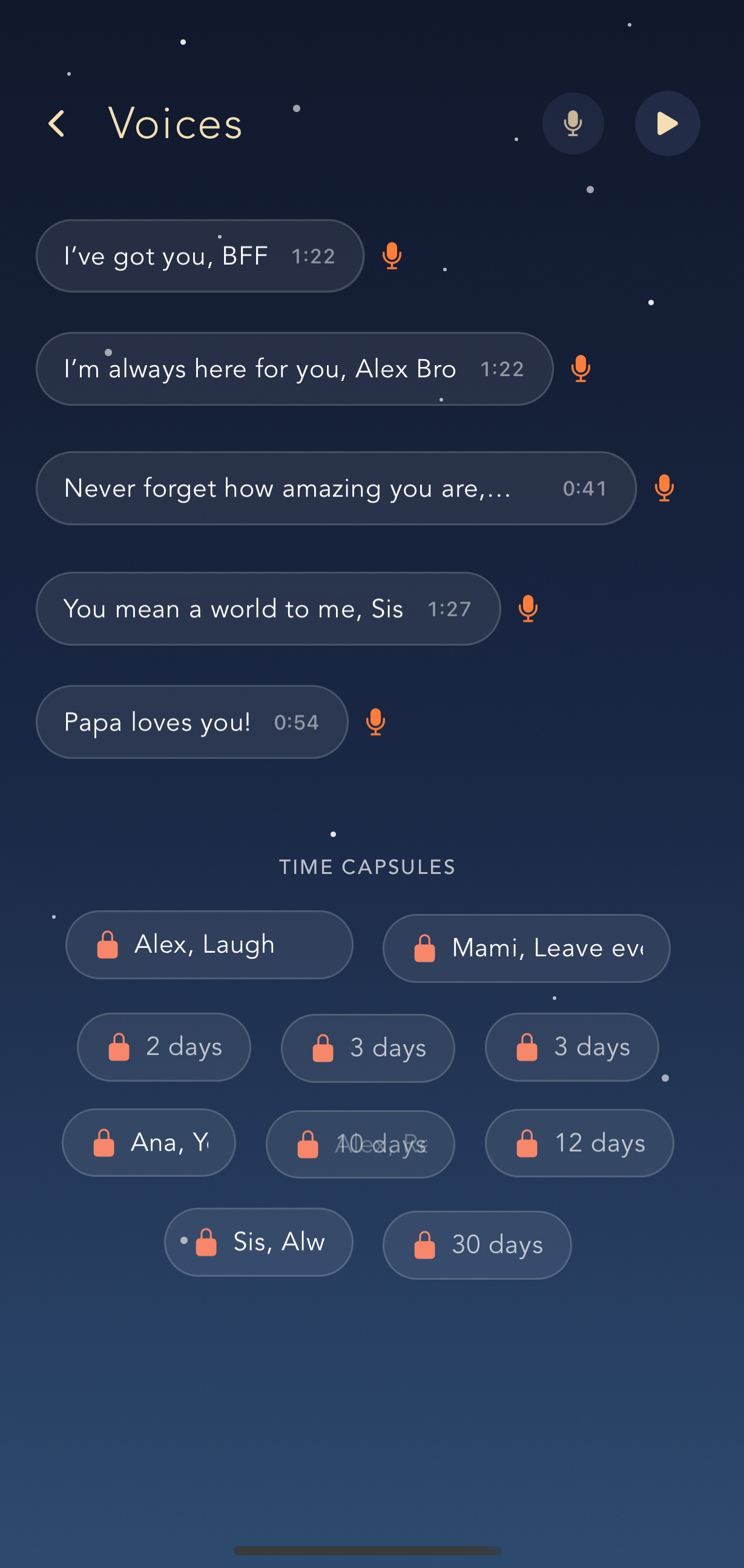
Record what you're reaching for, in your own voice. Hear it every morning before the world starts asking things of you. When you make it real, tap the trophy — the goal becomes an achievement, ready to replay when doubt creeps back in. Your brain replays the feeling of succeeding, not just the memory of it.
"In simple terms… what you can hear yourself promise, you can also hear yourself prove."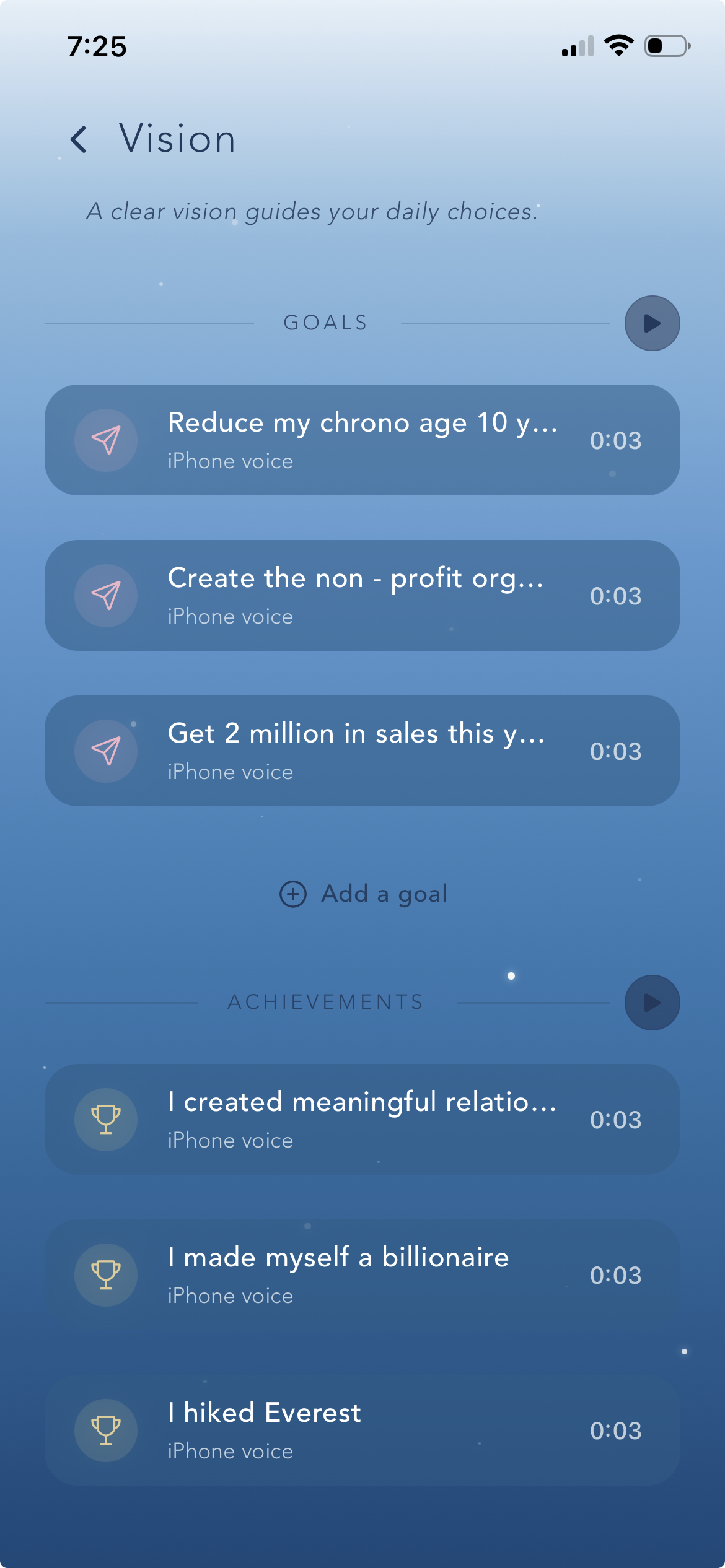
Start with the ones we wrote — recorded in a steady voice, with timed pauses for you to repeat each line three times. Then add your own, in your own words, in your own voice. The more precisely you describe what you want to believe, the more your brain treats it as already real.
"In simple terms… our words to get you started. Your words to make it land."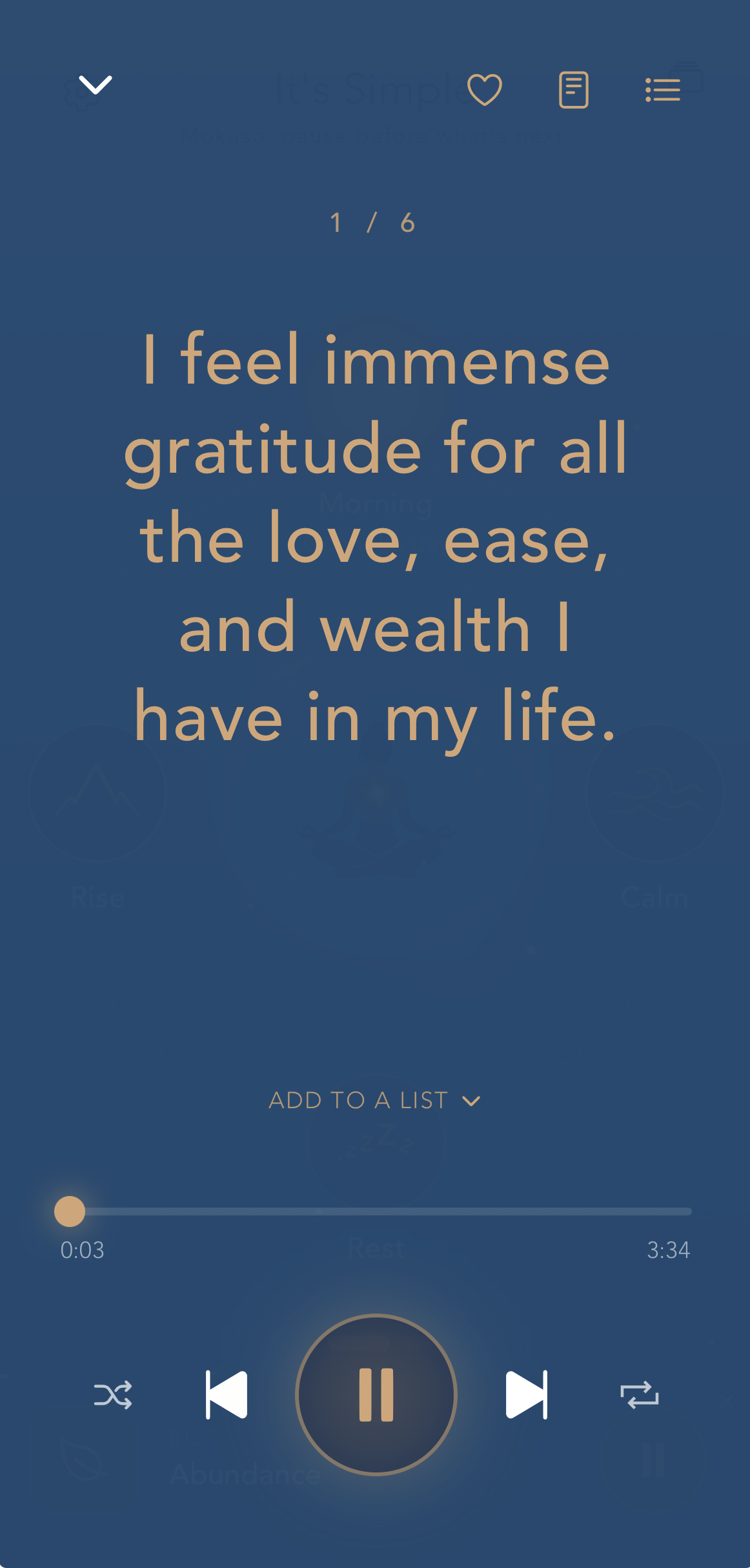
Some days you arrive carrying fear, sadness, shame, anger, or loneliness. Other days you're working toward growth, purpose, freedom, connection, or confidence. Tap what's true right now and get a practice designed for it — not a generic meditation, but content chosen for the exact thing you're moving through. Naming what you feel calms the amygdala in seconds; meeting it with the right practice is how it stops running the day.
"In simple terms… the door changes depending on what you bring to it."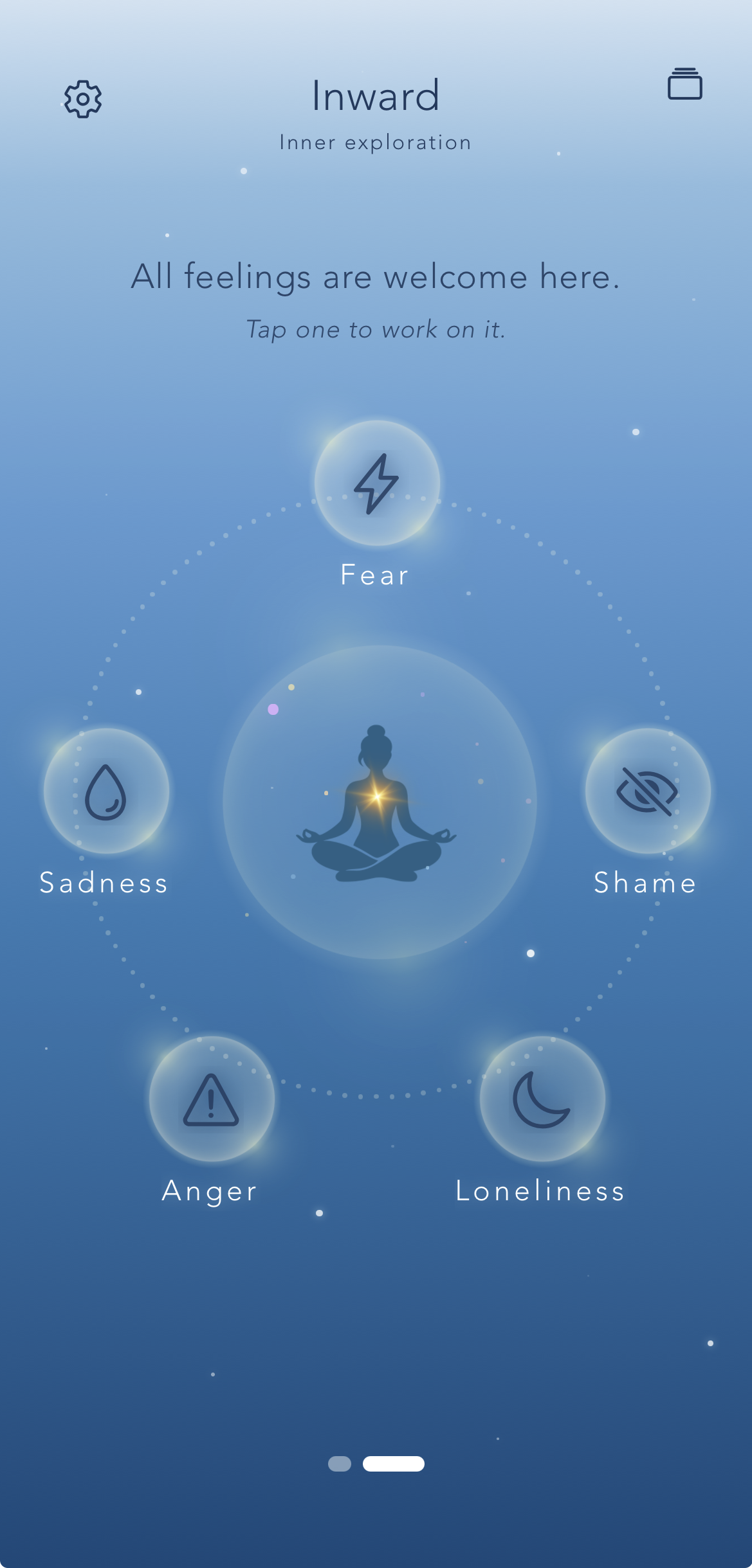
Ten guided meditations designed to calm your nervous system, release stored tension, build confidence, and prepare your mind for deep sleep. Each one uses timed pauses that guide your breath and attention — activating the same brain regions as real experience. Over time, your prefrontal cortex thickens, your amygdala shrinks, and stillness becomes something your body knows how to find on its own.
"In simple terms… your brain doesn't know the difference between imagining calm and being calm."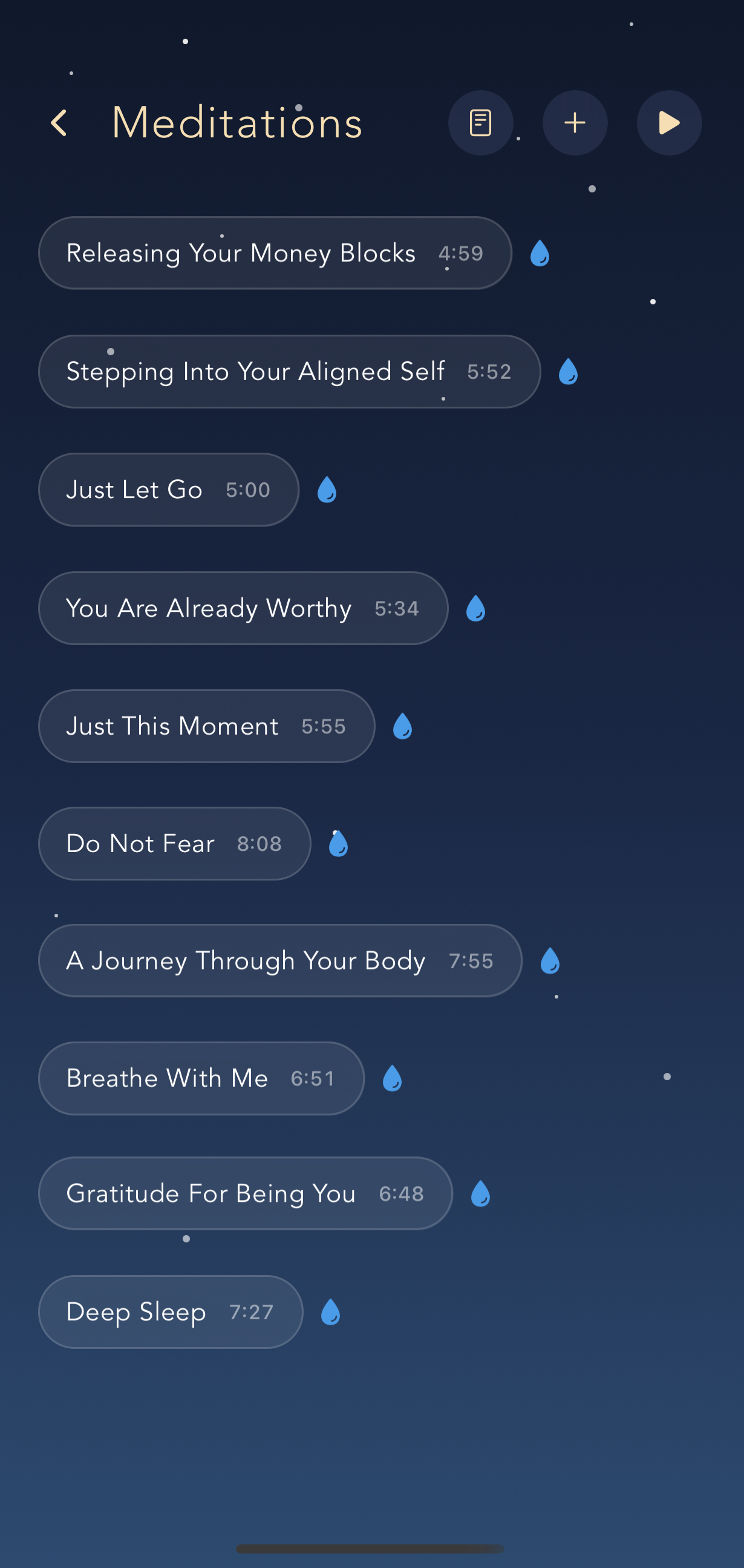
Open the day with intention, not with a notification. Rise begins with a steady drum chime that wakes the body before the mind starts managing it, then moves through affirmations chosen to set your energy — abundance, strength, growth, joy. Your nervous system gets to lead the day instead of catching up to it.
"In simple terms… your day starts with you, not your phone."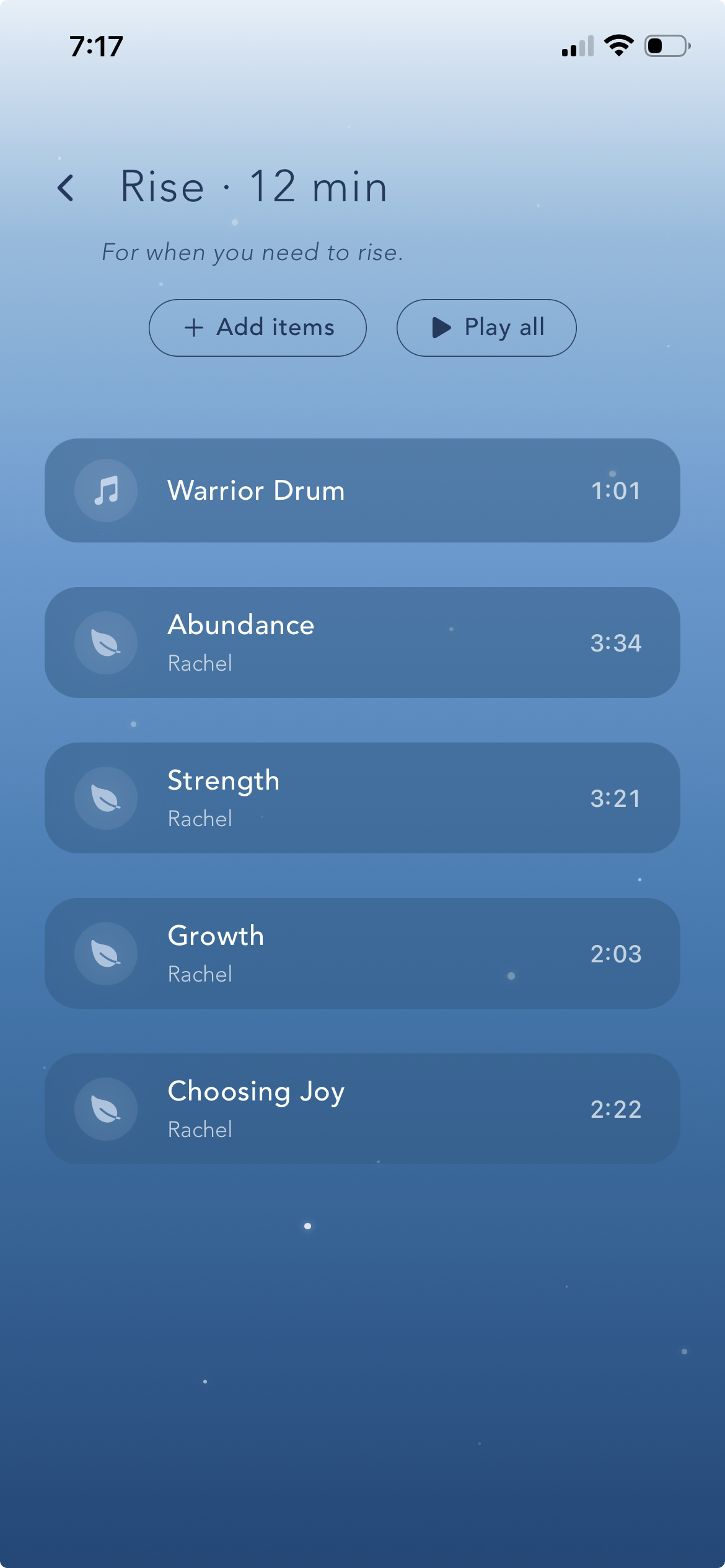
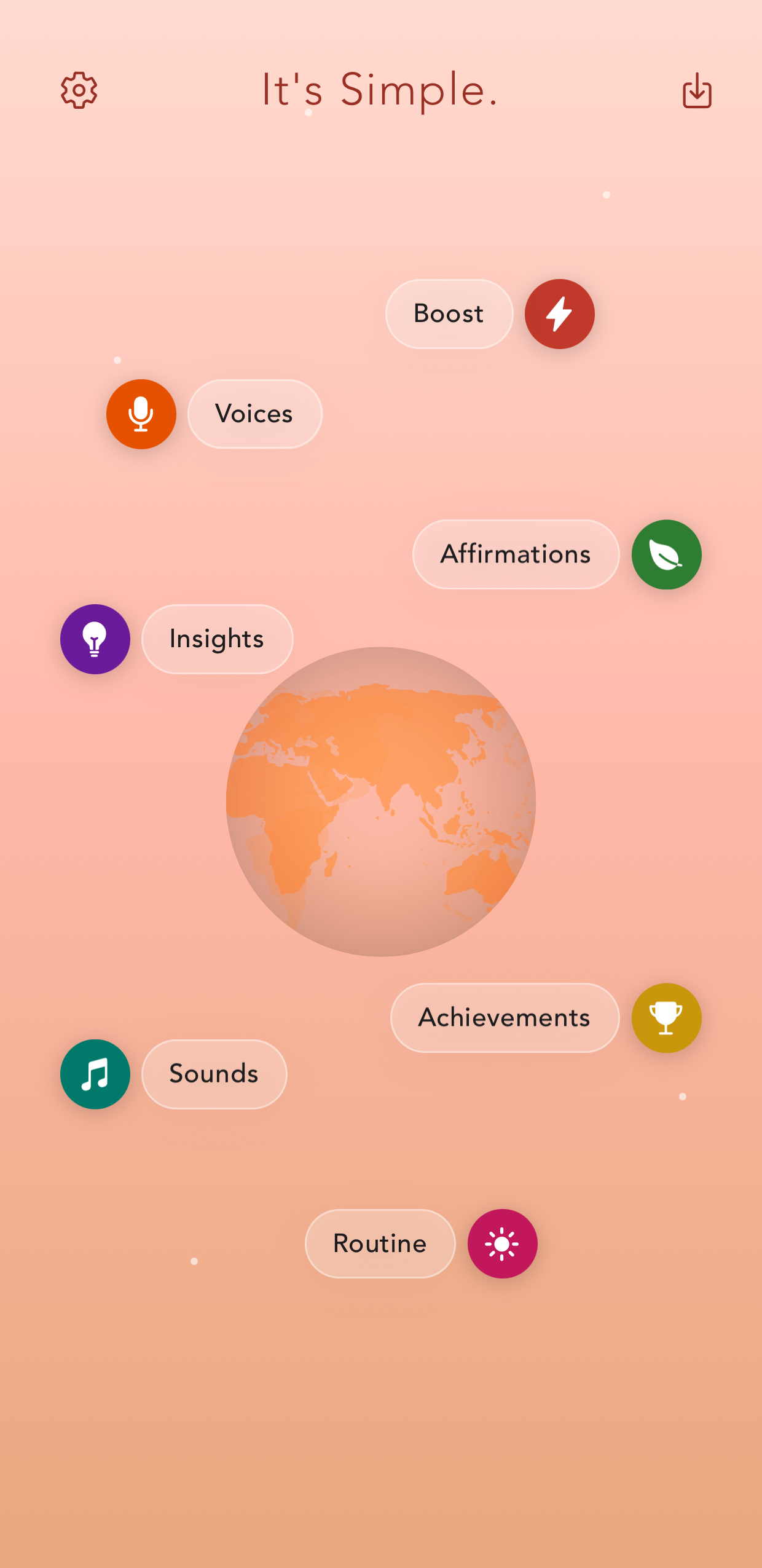
Curated paths, guided affirmations, deep meditations, brief insights, your own voices, ambient sounds, and a personal vision board. Seven categories, one tap away. Every piece chosen or made by you — designed to support the practice, never overwhelm it. The depth is here when you're ready for it.
"In simple terms… everything you've made, exactly where you left it."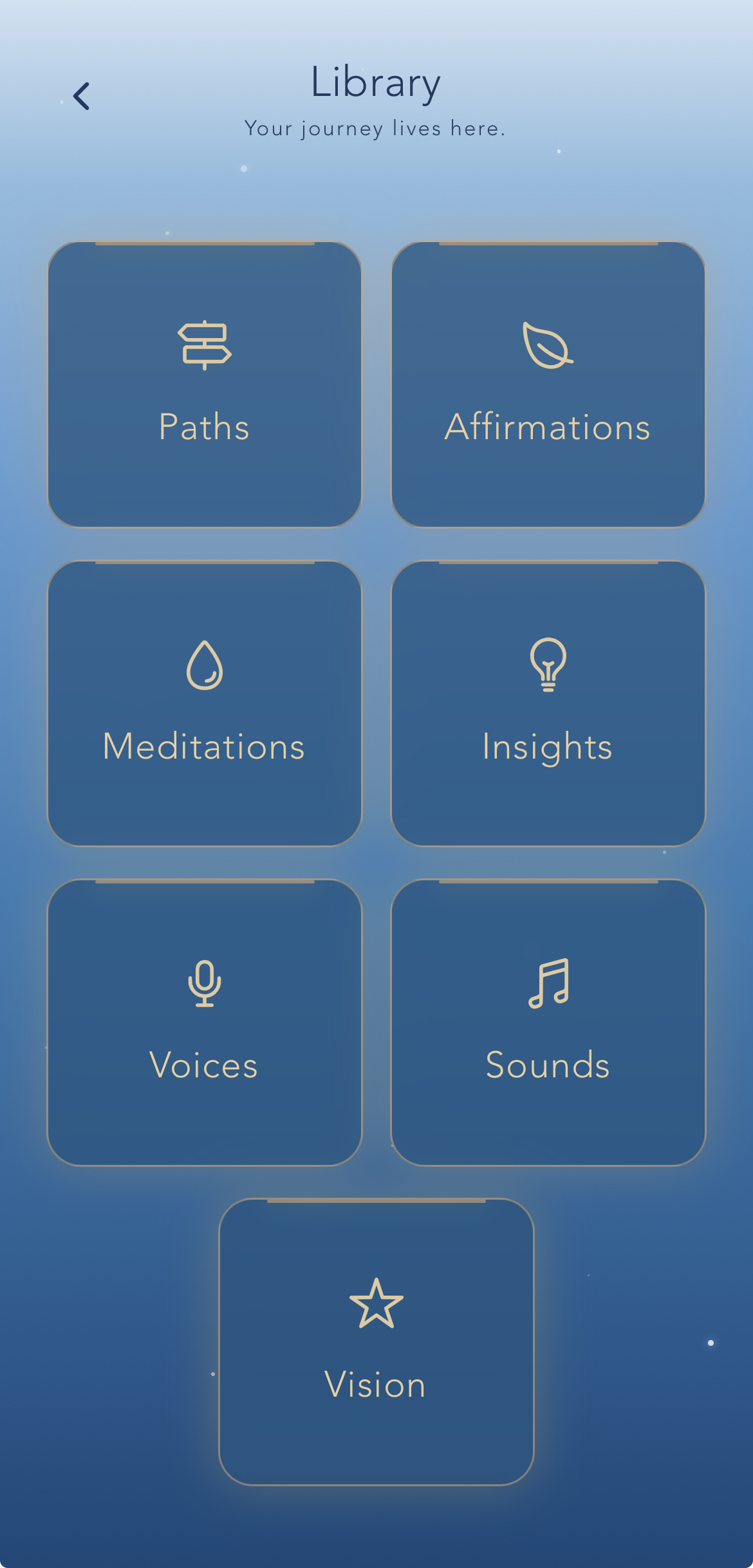
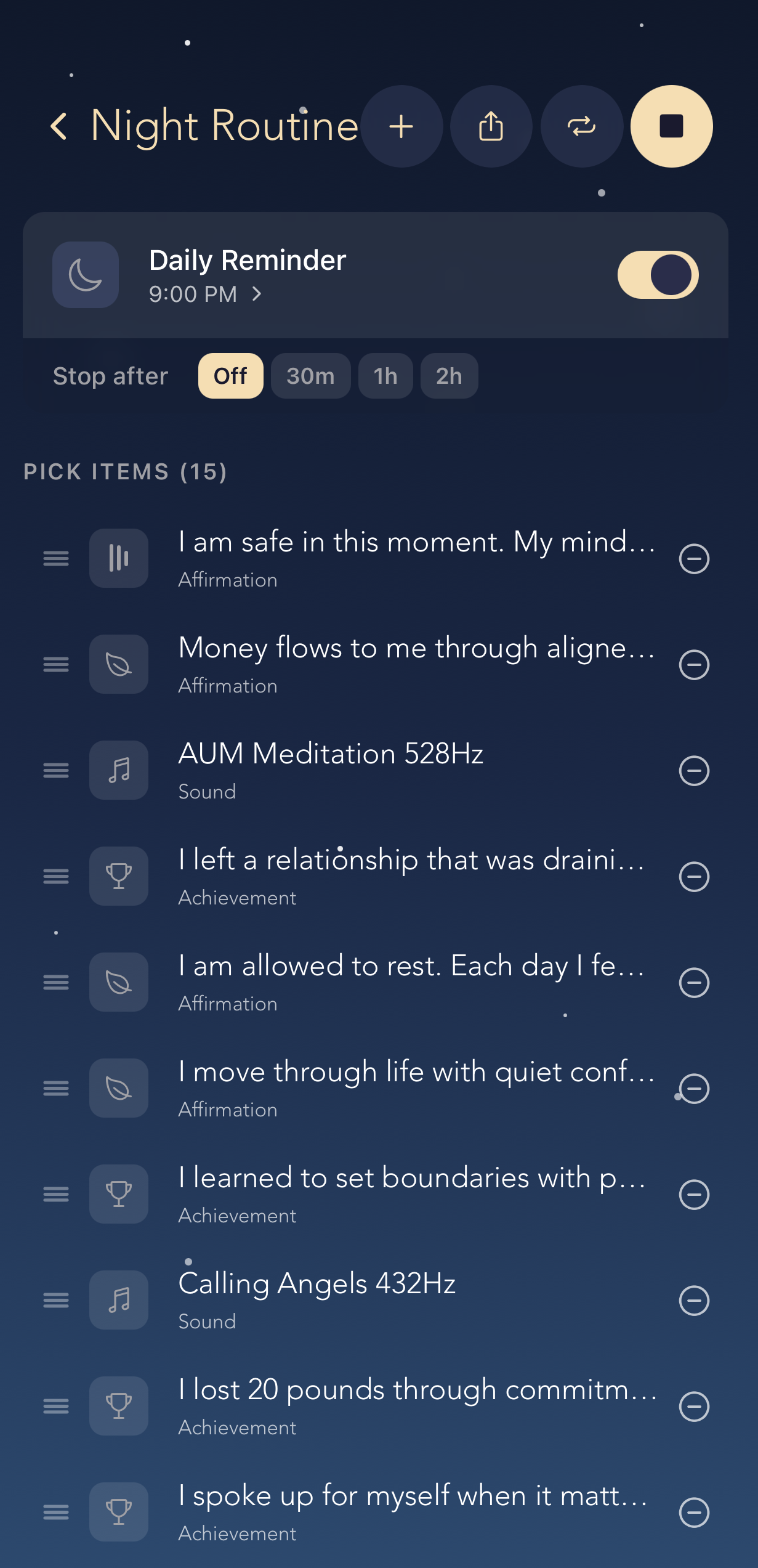
A morning playlist that starts with a single earphone button press — no screen, no stimulation, still half-asleep. At night, your playlist loops softly until it stops on its own, letting your mind absorb every word as you drift off. Two daily windows, both working while you rest.
"In simple terms… between asleep and awake, your brain absorbs most."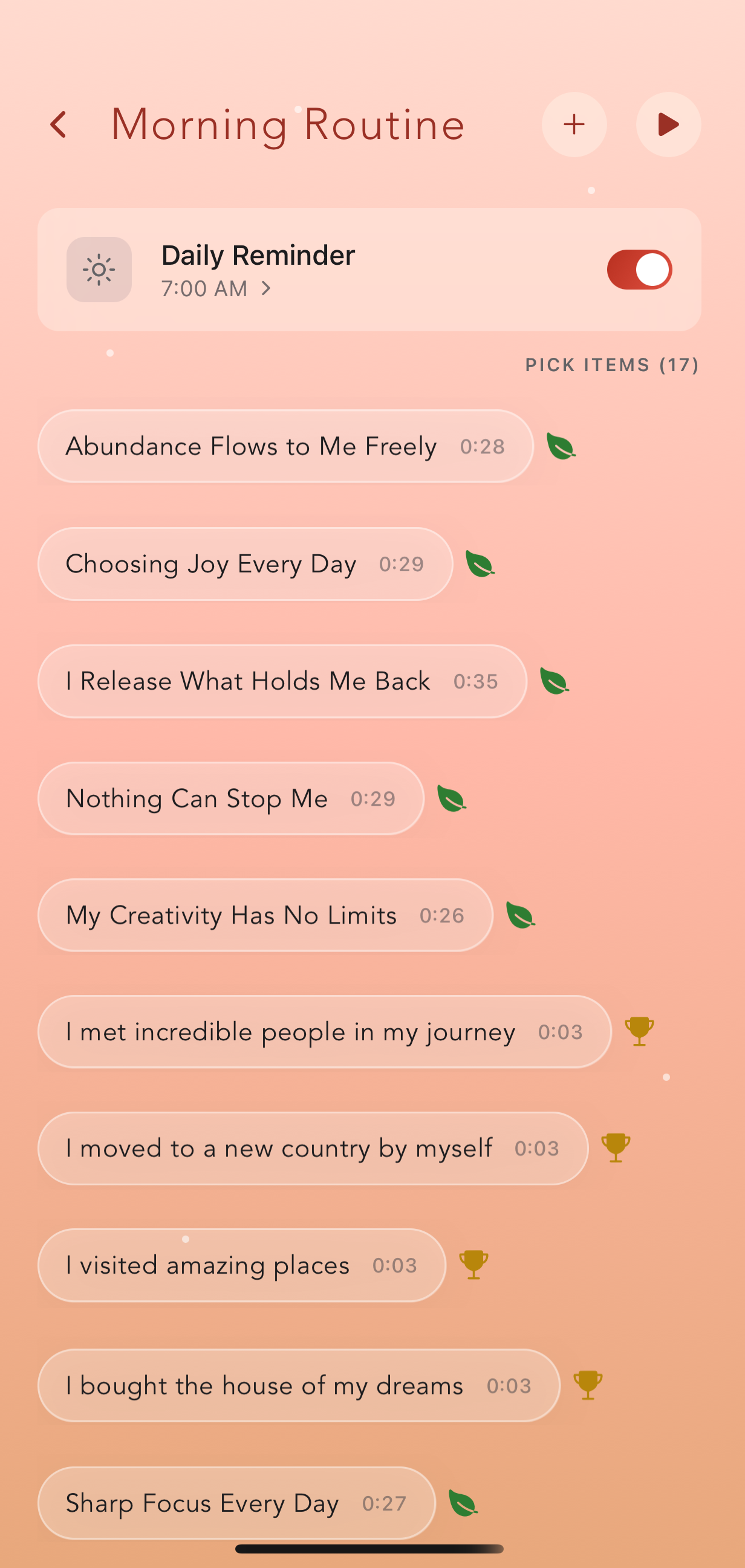
The app works without an account — nothing leaves your phone. If you sign in, only your voices and profile back up to your own private cloud account so you don't lose them on a new device. Either way: no analytics, no tracking, no ads.
Works without an account. Sign in only to back up voices across devices.
Once content is loaded, the app plays without internet.
We don't sell data. We don't run ads. We don't track behavior.
No subscriptions. No hidden fees. Just you.
It's Simple is an inner-work app organized around two homes. Home 1 — Rise, Calm, and Rest pills with morning and night routines, for the energy you need right now. Home 2 — Inward, a constellation of feelings to meet what you're carrying or reaching for. The Library holds seven kinds of content: Paths, Affirmations, Meditations, Insights, Voices, Sounds, and Vision.
It's free. No subscriptions, no ads, no hidden fees.
There are two home screens you swipe between. Home 1 shows a breathing meditator at the center with three pills around it — Rise, Calm, Rest — for the energy you need right now, plus your morning and night routine pill. Home 2 is Inward: a constellation of feelings. Tap one and the app meets you there with the right audio.
Yes. Audio continues playing even when your phone is locked or you switch to another app. Works with both speakers and earphones, and responds to the lock screen controls.
Go to Settings → Accessibility → Spoken Content → Voices → English, and download voices marked "Enhanced" or "Premium" for the most natural-sounding playback.
Yes. You can share individual recordings or full playlists via a private link. The recipient can import everything into their own copy of the app with one tap.